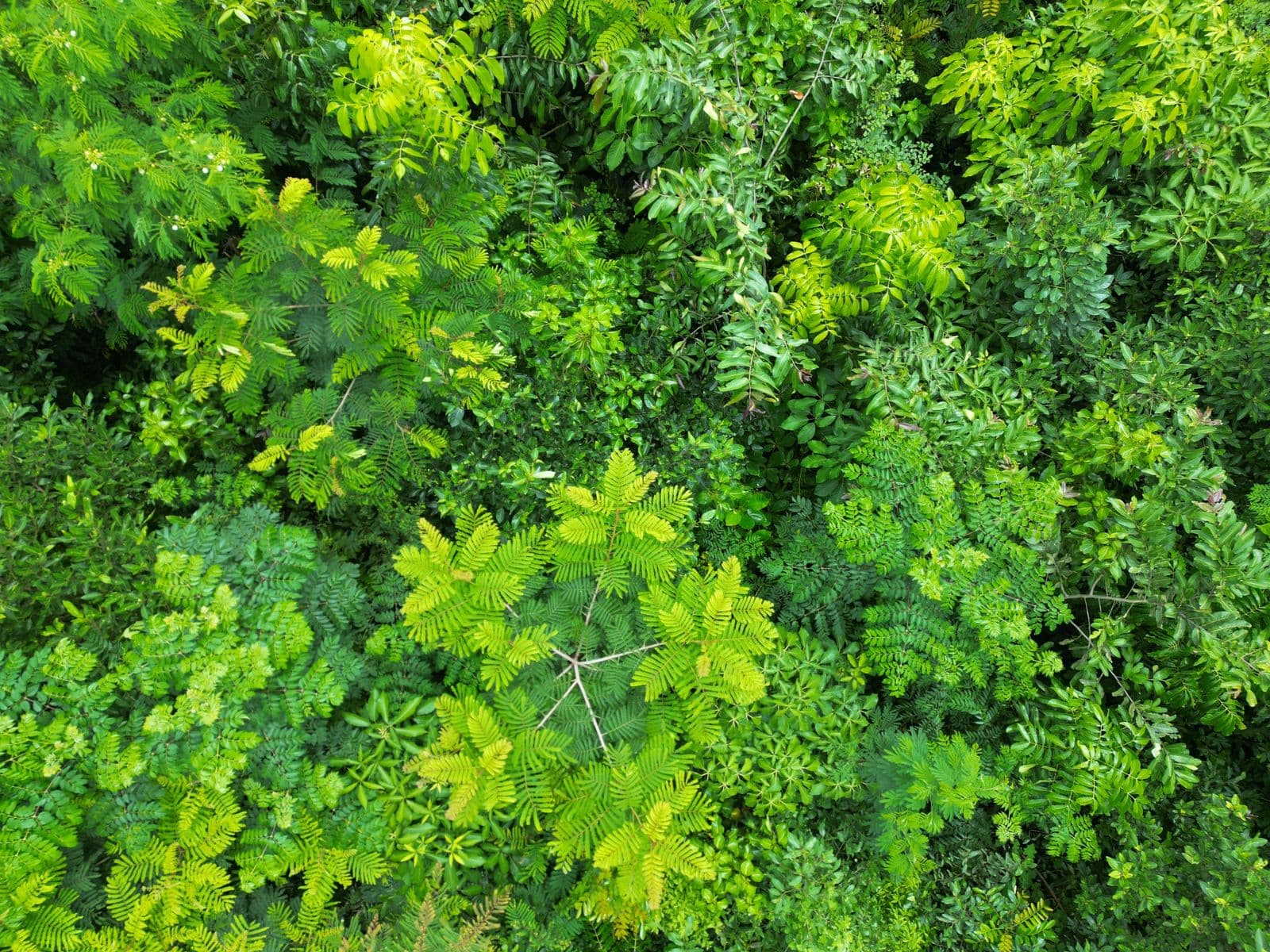
Our Impact Goal
5,00,00,000
Total Saplings Target
Across all of Karnataka
2,00,00,000
Green Ring Bengaluru
In & around Bengaluru
3,00,00,000
Rest of Karnataka
Across Karnataka's districts
Creating Green, Living,Biodiverse Karnataka
Restoring Karnataka's ecological balance through native sapling plantation, Miyawaki forests, biodiversity conservation, groundwater recharge, and community participation.
Plant. Protect. Recharge. Restore.
About Dhare Foundation
Let Karnataka Breathe Again
Dhare Foundation is working to restore Karnataka's ecological balance. Our mission is to create green spaces that are not just tree plantations, but living habitats for birds, butterflies, bees, insects, soil organisms, and future generations.
Through our flagship mission Green Ring Bengaluru, Dhare Foundation aims to plant 2 crore saplings in and around Bengaluru and 3 crore saplings across the rest of Karnataka — making it a 5 crore sapling ecological movement. So far, we have planted over 45,603 saplings across Karnataka.
Official Partnership
MoU with Karnataka State Legal Services Authority
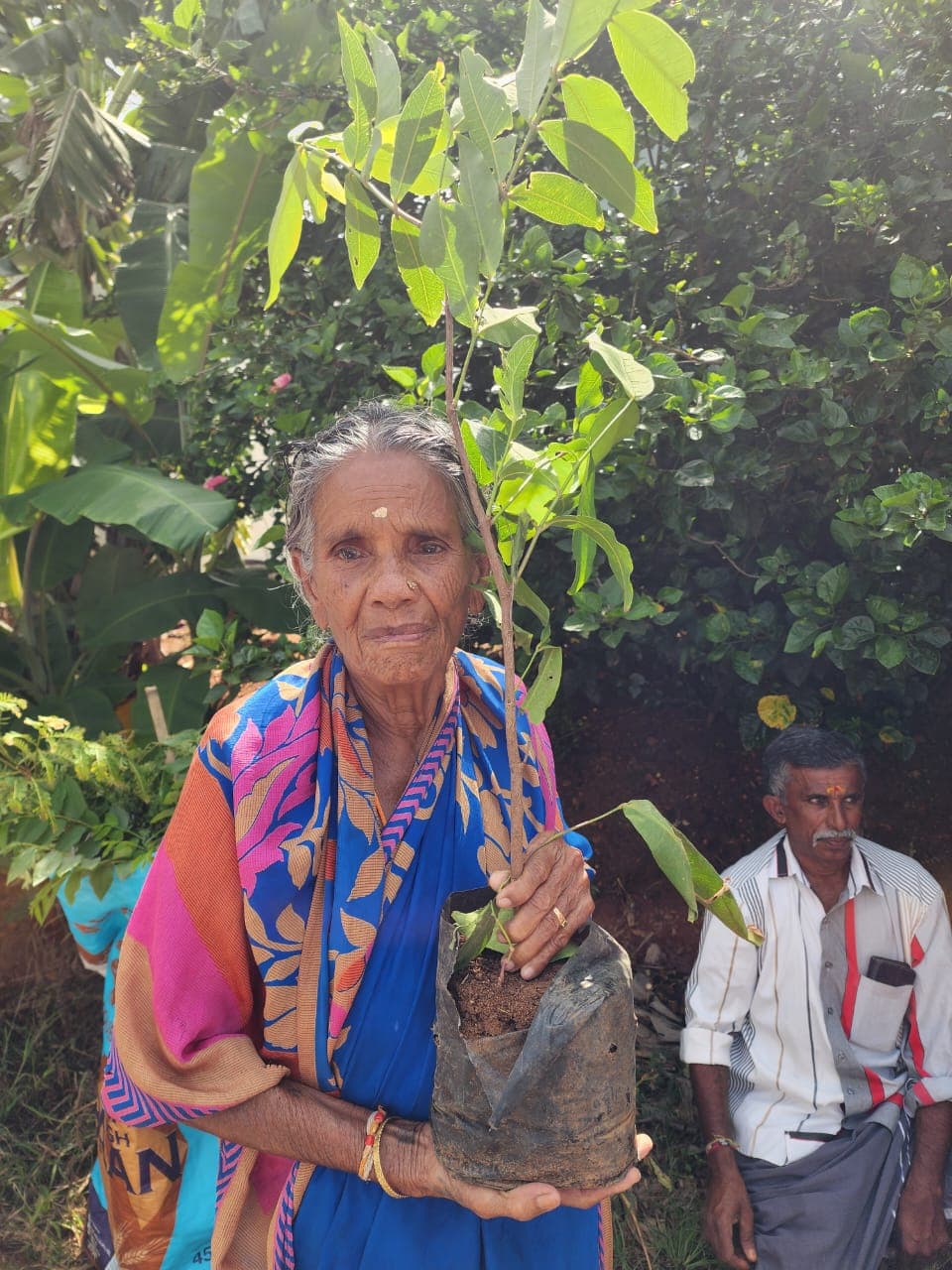
Ecological Mission
Restoring Karnataka's Green Heritage
Dhare Foundation is working towards large-scale ecological conservation across Karnataka — encouraging plantation, biodiversity protection, groundwater recharge, and environmental restoration through cooperation between institutions, local bodies, government departments, communities, and civil society.
Green Ring Bengaluru
2 Crore Saplings for Bengaluru
Creating a green ecological belt in and around Bengaluru with 2 crore native saplings to restore urban biodiversity, reduce pollution, and recharge groundwater.
Tank Rejuvenation
Restoring Water Bodies, Recharging Groundwater
Karnataka's tanks are ecological systems that support agriculture, groundwater recharge, birds, aquatic life, cattle, local communities, and surrounding vegetation. Dhare Foundation aims to support tank rejuvenation by:
- ✓Protection of tank surroundings
- ✓Native plantation around tank bunds
- ✓Prevention of soil erosion
- ✓Improving groundwater recharge
- ✓Creating biodiversity zones around water bodies
- ✓Supporting birds, butterflies, insects, and aquatic ecosystems
Green Ring Bengaluru
2 Crore Saplings for Bengaluru's Ecological Future
Bengaluru is expanding rapidly. Construction, traffic, concrete surfaces, dust pollution, shrinking open spaces, and loss of native vegetation have created serious pressure on the city's environment.
The Green Ring Bengaluru initiative aims to create a green ecological belt in and around Bengaluru by planting 2 crore native saplings , helping create:
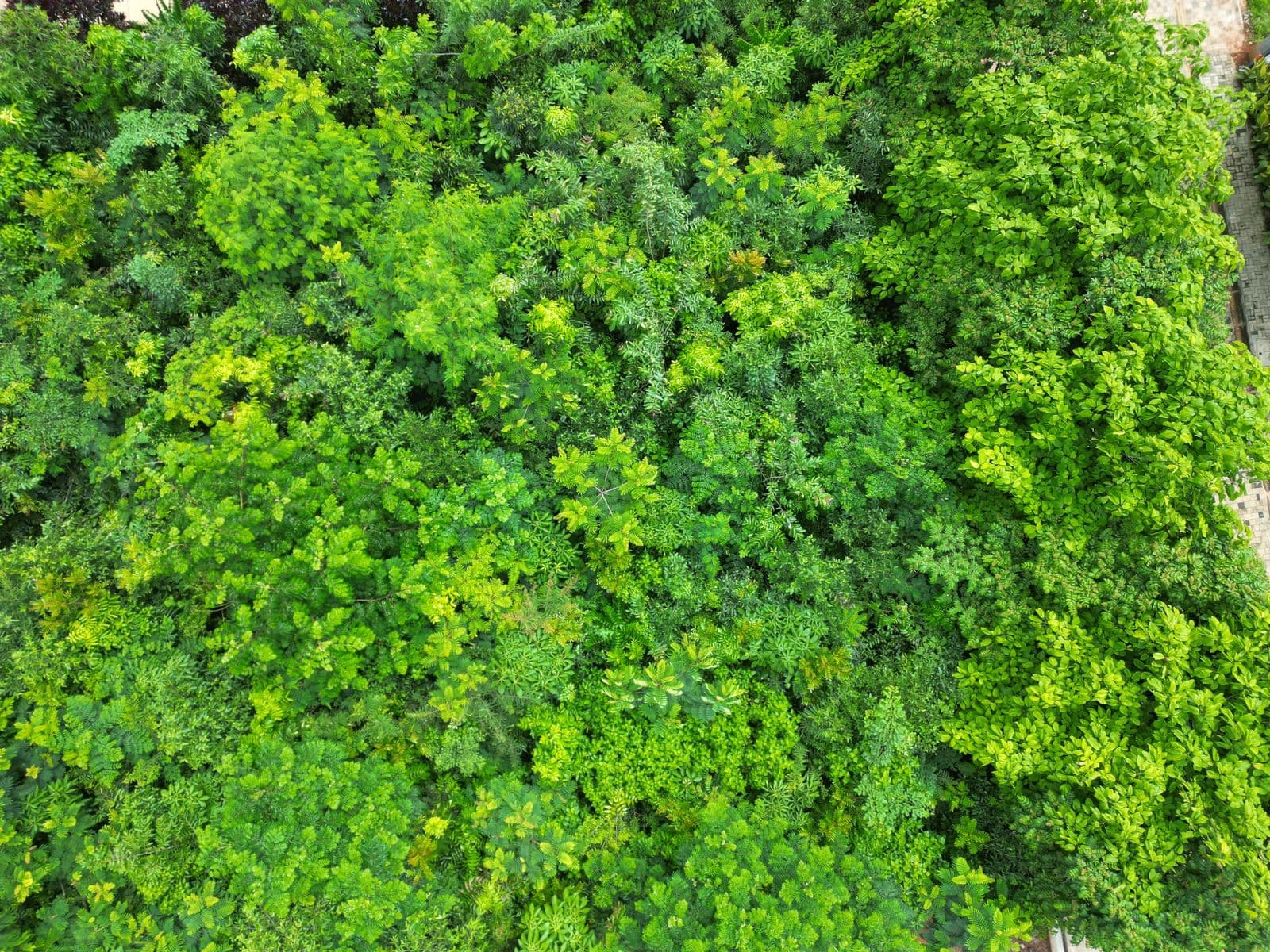
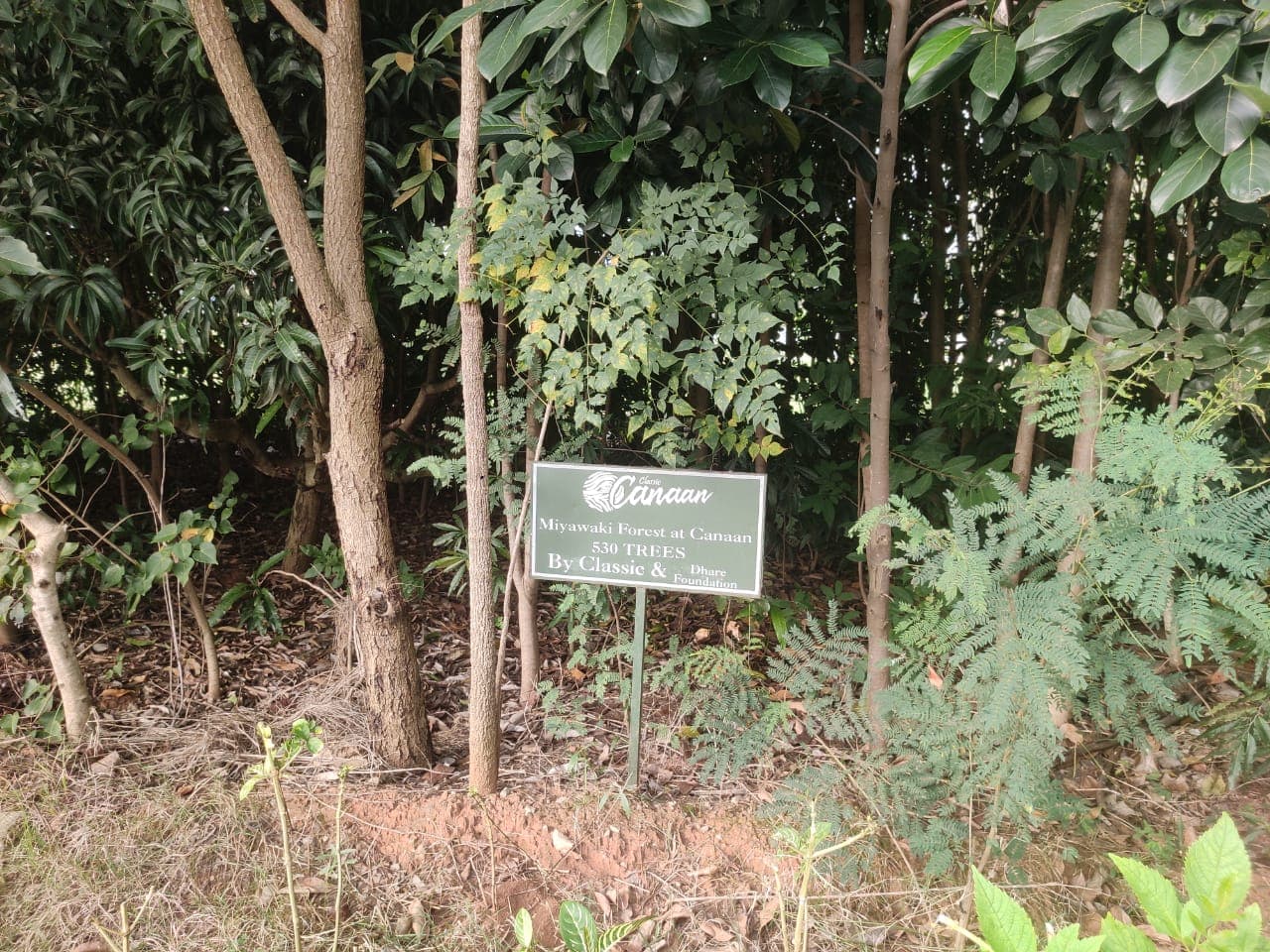
Miyawaki Forest — Bengaluru region
On the Ground
Major Projects & Impact Locations
Real sites, real trees, and real ecological impact — across schools, farms, institutions, and rural communities throughout Karnataka.
EKAM Edify School (2021)
Inaugurated by MP A. Narayanaswamy and retired IAS Madan Gopal
NAAC Bengaluru (2021)
Inaugurated by Education Minister B.C. Nagesh (3,000 saplings)
Govt ITI Davanagere (2023)
Community leaders and spiritual dignitaries present (1,000 saplings)
Devagiri Farms (2022–24)
10,000+ saplings grown into dense green cover
PPISR Institute (2023)
Shri Ishapriya Thirtha Swamiji inaugurated the plantation drive (1,500 saplings)
Mandya Rural Project (2025)
2,000 fruit saplings for village self-reliance
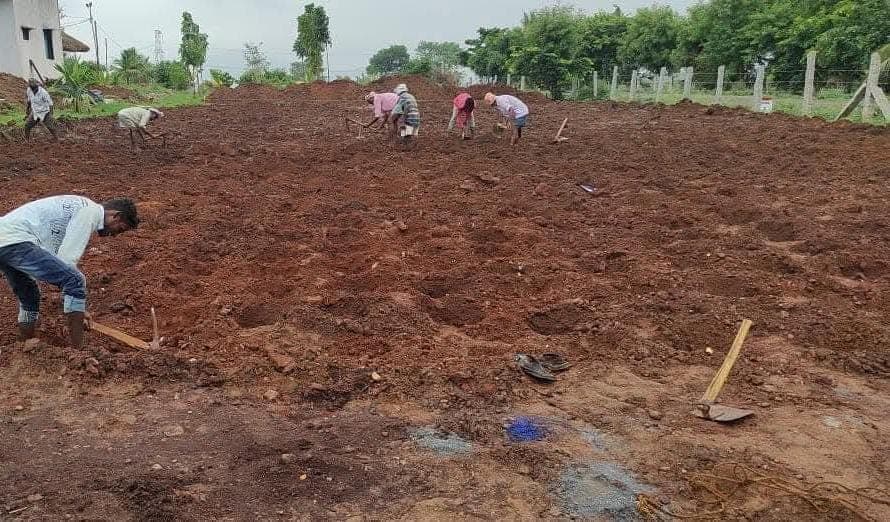
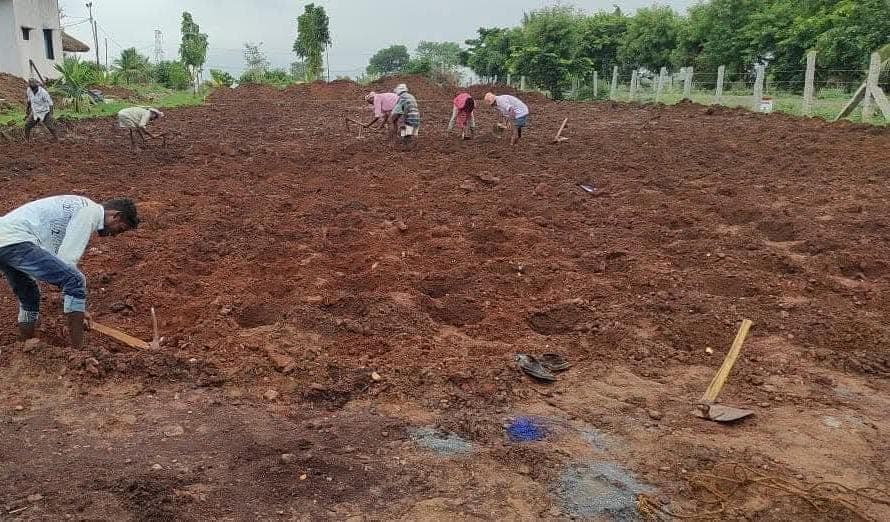
Before: Bare Land — Soil Preparation
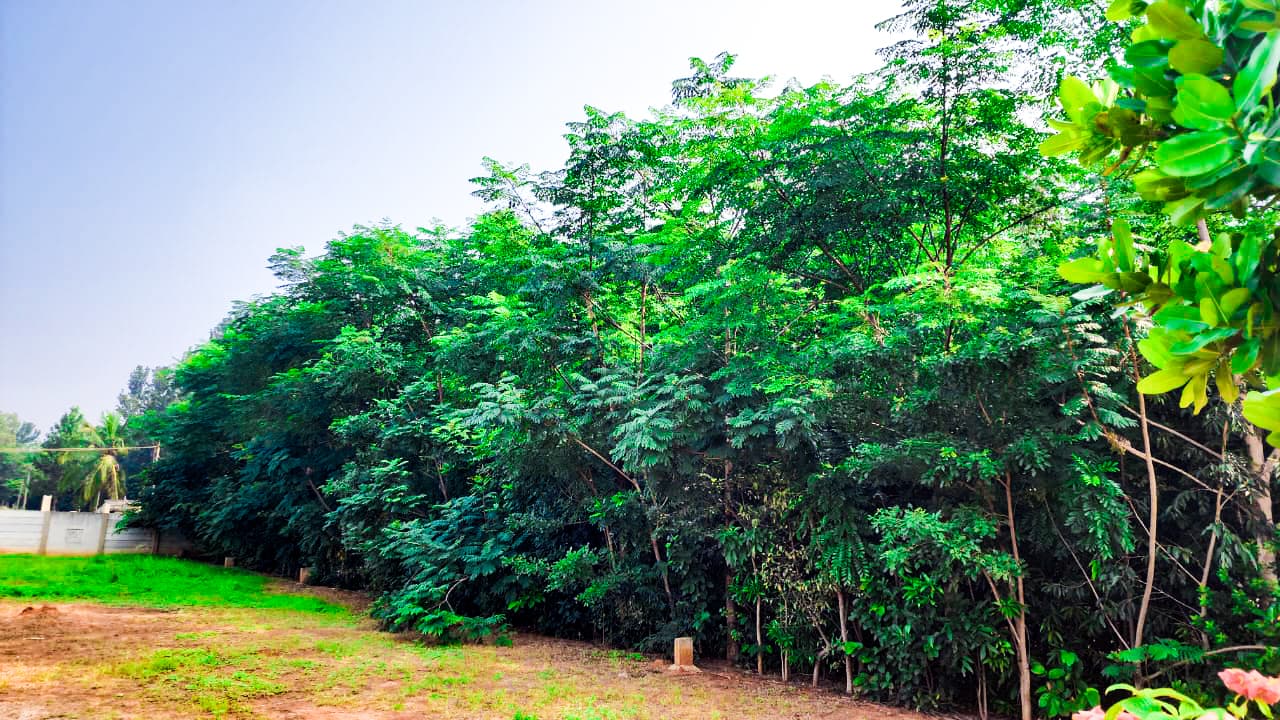
After 18 Months: Dense Native Forest
The Transformation
Bare Land → Living Forest in 18 Months
The Miyawaki method creates fast-growing, multi-layered native forests that become real habitats far sooner than conventional planting.
The Science
Why do we need TREES?
Trees are not decoration — they are the foundation of life, climate, and ecological balance.
Oxygen Production & Carbon Sequestration
Through photosynthesis, trees absorb carbon dioxide (CO₂) and release oxygen (O₂). A mature tree can absorb approximately 20–25 kg of CO₂ per year, reducing greenhouse gases and mitigating climate change.
Air Purification & Dust Capture
Tree leaves trap particulate matter (PM2.5, PM10), heavy metals, and pollutants like nitrogen oxides (NOx) and sulfur dioxide (SO₂). Urban trees can reduce airborne dust levels by 30–60% in dense corridors.
Temperature Regulation & Urban Heat Island Control
Trees provide shade and cool the atmosphere through evapotranspiration, lowering surrounding temperatures by 2–8°C in urban areas and significantly reducing heat stress.
Groundwater Recharge & Hydrological Balance
Tree roots enhance soil infiltration capacity, allowing rainwater to percolate into aquifers. Forested areas can increase groundwater recharge by 15–40% compared to barren land.
Soil Fertility & Microbial Health
Leaf litter decomposes into organic matter (humus), improving soil carbon content and supporting beneficial microbes, fungi (mycorrhizae), and nutrient cycling.
Biodiversity Support (Flora & Fauna Habitat)
A single/group of trees can host hundreds of species of insects, birds, fungi, lichens, and microorganisms, forming the foundation of local food webs and ecological stability.
Climate Regulation & Rainfall Patterns
Large forest systems influence regional rainfall through moisture recycling and atmospheric moisture transport. Forest loss is directly linked to reduced monsoon reliability.
Noise Reduction & Psychological Well-being
Green belts can reduce urban noise levels by 5–10 decibels. Exposure to trees is scientifically linked with lower cortisol (stress hormone), improved attention, and better mental health.
Large-Scale Greening
Traditional Plantation
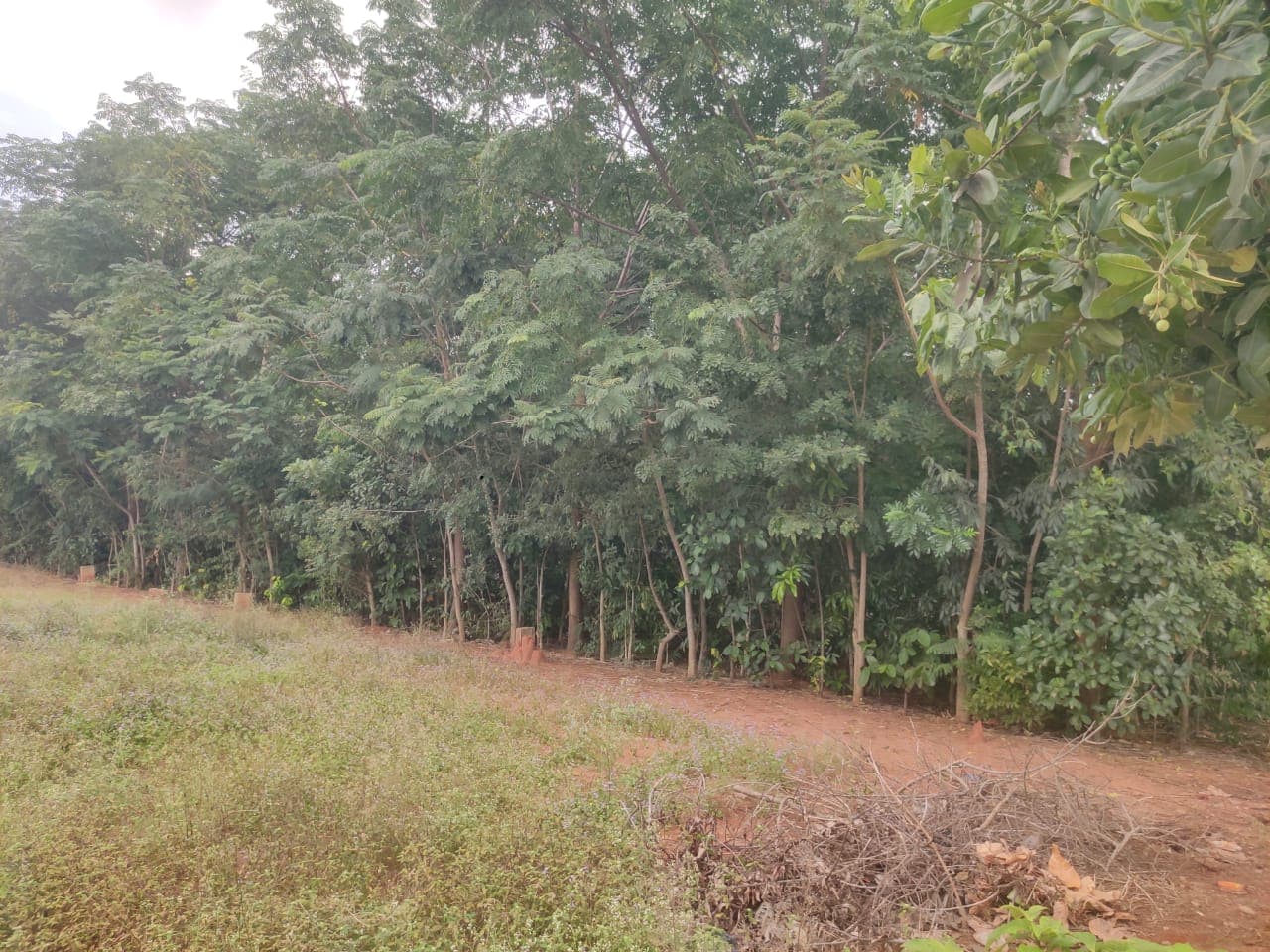
Alongside Miyawaki forests, Dhare Foundation conducts large-scale traditional native plantation across open land, institutional campuses, roadsides, and tank bunds — covering more ground with carefully chosen native species.
Native sapling row plantation — Karnataka
Where We Plant
Why Native Species?
Native trees have co-evolved with local birds, insects, and soil organisms over thousands of years. They provide the right food, nesting materials, and habitat that exotic ornamental trees cannot. Native plantations create real ecological value — not just green cover.
How It Works
Site Assessment
Identify land type, soil condition, sunlight, and water availability.
Species Selection
Choose native species suited to the local ecology — trees that birds, butterflies, and insects rely on.
Soil Preparation
Dig pits, enrich soil with compost and organic matter for healthy root growth.
Plantation
Plant saplings with correct spacing for canopy development over time.
Watering & Care
Regular watering for the first two summers is critical for survival.
Monitoring
GPS-tagged sites are monitored for survival rate, growth, and long-term health.
Why Miyawaki Forests?
Small spaces. Dense forests. Big ecological impact. The Miyawaki method creates fast-growing, multi-layered forests using local species — bringing back lost habitats into urban and semi-urban spaces.
A Living Home for Many Species
A Miyawaki forest becomes a living home for many species. Dense native vegetation gives food, shade, nesting space, moisture, and protection. Over time, these forests become small biodiversity islands inside cities.
Groundwater Recharge
Tree roots loosen soil; leaf litter improves organic matter. Forests act as natural sponges.
Urban Pollution Buffer
Dense native forests trap dust, reduce PM2.5/PM10, lower heat and improve local microclimate.
Biodiversity Islands
Multi-layered native forests become habitats for birds, butterflies, insects, and soil life in cities.
The Crisis
Why Urban Biodiversity Is in Danger
Urban areas are becoming increasingly difficult for biodiversity to survive. When insects disappear, birds lose food. When pollinators disappear, plants suffer. When native plants vanish, the entire local food chain becomes weak.
"Biodiversity is not decoration. It is the foundation of life."
Gallery
Forests in the Making
From soil preparation to dense canopy — witness the transformation of bare land into living green habitats.

Dhare Foundation team with Karnataka State Legal Services Authority officials.

Union Finance Minister Nirmala Sitharaman honored Dhare Foundation Director D.M. Purnesh at an event in Bangalore, August 13, 2022.
Dense native canopy from a Miyawaki forest site
Native saplings planted to support birds, butterflies, and pollinators
Soil preparation before native sapling plantation
A row of thriving native trees at a Dhare Foundation plantation site
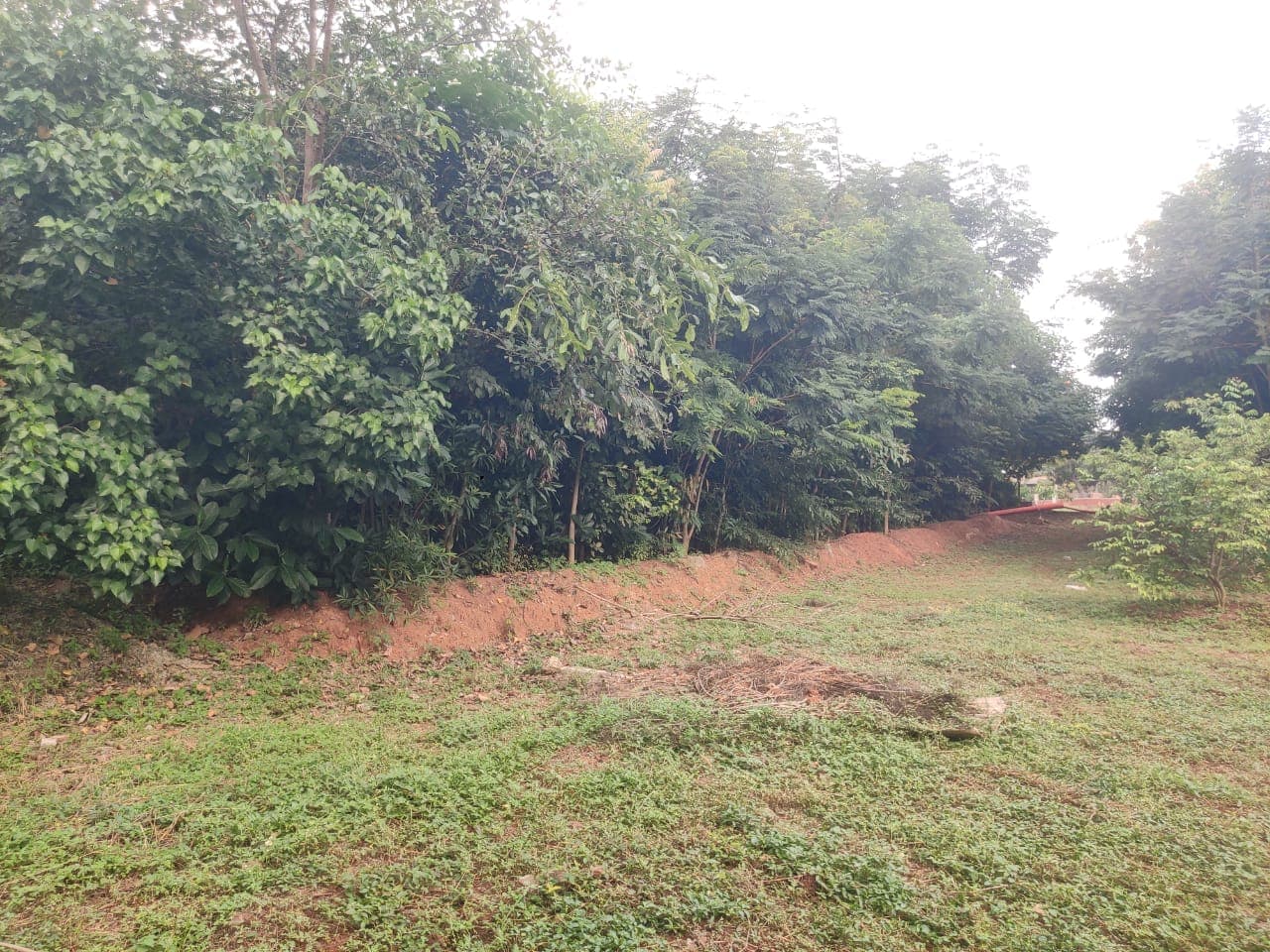
A Miyawaki forest site — forests in the making
Volunteers planting native saplings under Green Ring Bengaluru
Press & Media
Media Coverage
Dhare Foundation's ecological mission covered by leading media across Karnataka.
Support Our Mission
Donate to Plant, Protect, and Grow
Every contribution helps Dhare Foundation create long-lasting native green spaces across Karnataka.
₹200
Plant a Sapling
Prepare Soil. Plant Life.
- ✓Soil preparation
- ✓Native sapling plantation
₹395
Plant & Protect
Plant and Protect Through Summer.
- ✓Soil preparation
- ✓Native sapling plantation
- ✓Watering support for two summers
₹700
Complete Support
Complete Sapling Support.
- ✓Soil preparation
- ✓Native sapling plantation
- ✓Tree guard / fencing
- ✓Watering support for two years
Join Us
Become a Green Volunteer
Dhare Foundation welcomes citizens, students, professionals, families, resident welfare associations, companies, schools, colleges, and community groups to participate in plantation and ecological restoration activities.
Register as VolunteerVolunteers Can Help With